Safe, certified mold removal that solves the problem at its source.
From black mold behind drywall to hidden colonies in HVAC systems, our IICRC-certified specialists remove every trace of mold — protecting your family, your property value, and your air quality.
What you can expect
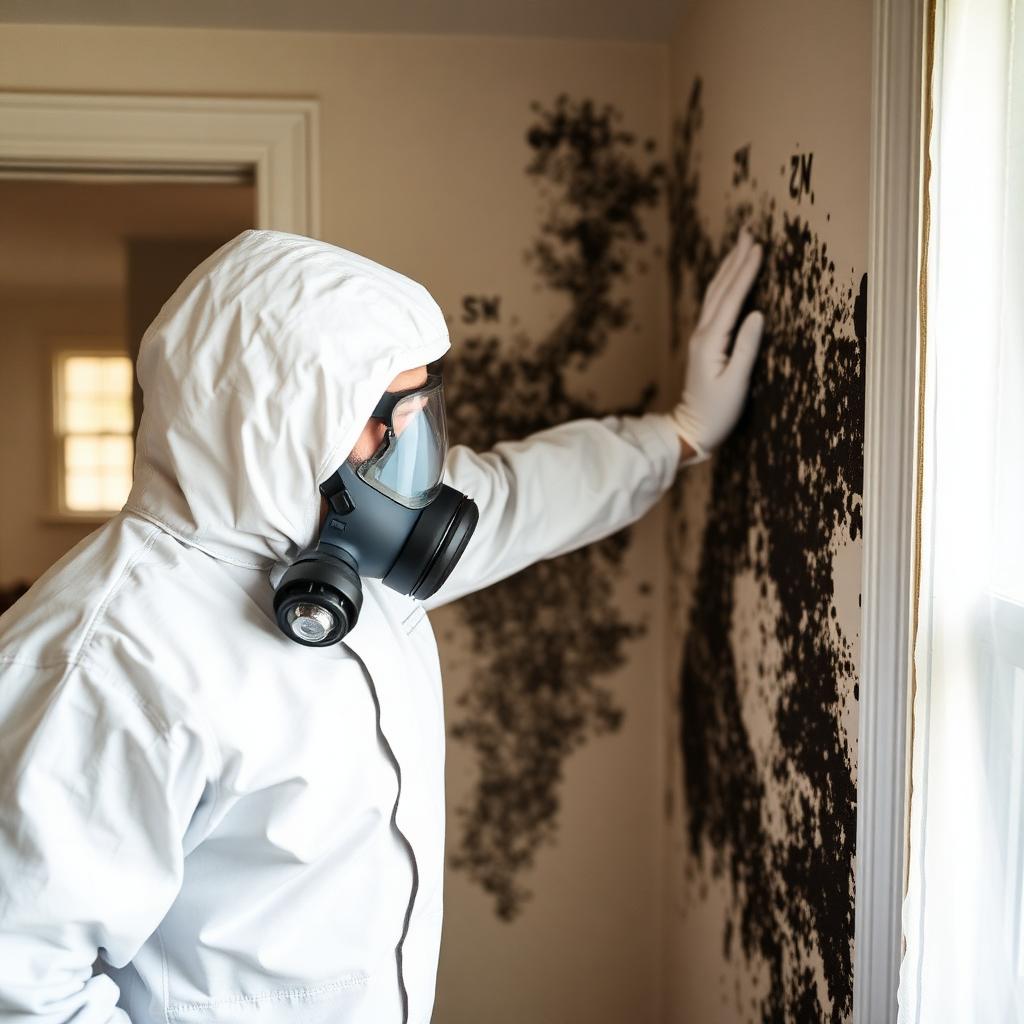
- IICRC-certified mold inspection and third-party air quality testing
- Full containment with negative air pressure to stop cross-contamination
- HEPA filtration and safe removal of all affected building materials
- EPA-registered antimicrobial treatment on every remaining surface
- Root-cause moisture correction so mold does not return
- Independent post-remediation clearance testing you can share with buyers, tenants, and insurers
A complete scope of work.
Comprehensive Mold Inspection
Visual assessment, moisture mapping, thermal imaging, and laboratory-analyzed air and surface samples to identify species and concentration.
Engineering Controls & Containment
6-mil poly barriers, decon chambers, and negative air machines prevent spores from spreading to unaffected rooms during removal.
HEPA Air Filtration
Medical-grade HEPA air scrubbers run continuously during remediation to capture airborne spores down to 0.3 microns.
Safe Material Removal
Careful demolition, double-bagging, and OSHA-compliant disposal of contaminated drywall, insulation, carpet pad, and porous materials.
EPA-Approved Antimicrobial Treatment
Every remaining framing member and surface is cleaned and treated with EPA-registered biocides to neutralize residual spores.
Structural Drying & Moisture Correction
We locate and correct the leak, humidity issue, or vapor barrier failure that let mold grow in the first place.
Post-Remediation Verification
Independent industrial hygienists perform clearance sampling — you receive a written pass/fail report.
Insurance Claim Documentation
Photo logs, moisture readings, and lab results packaged for smooth insurance approval and direct billing.
Written Workmanship Warranty
Every remediation project comes with a written guarantee — if mold returns in the treated area, we come back.
Why professional mold remediation matters
Mold is more than a cosmetic problem. Once colonies establish themselves inside a building envelope, they release millions of microscopic spores and — in the case of species like Stachybotrys chartarum (black mold) and Aspergillus — mycotoxins that can trigger asthma attacks, chronic sinus infections, headaches, fatigue, and long-term respiratory illness. Children, seniors, and anyone with a compromised immune system are particularly vulnerable.
The problem with DIY mold removal is that surface cleaning with bleach or vinegar only addresses what you can see. Ninety percent of the colony often lives inside wall cavities, above ceilings, under flooring, or inside HVAC ductwork — feeding on cellulose in drywall, wood framing, and dust. Without professional containment and negative air pressure, disturbing visible mold can release a surge of spores that seeds the rest of the home, turning a localized issue into a whole-house contamination event.
A certified remediation firm follows the IICRC S520 standard — the industry benchmark for mold cleanup. That standard dictates how the work area must be isolated, what personal protective equipment must be worn, how contaminated materials are handled, and how the space must be verified as clean before reconstruction begins. Cutting corners on any of those steps is how mold problems come back six months later.
Health risks of untreated mold exposure
The CDC and EPA both link indoor mold exposure to upper respiratory tract symptoms, coughing, wheezing, and asthma exacerbation in otherwise healthy people. For people with mold allergies, immunosuppression, or chronic lung conditions, exposure can lead to fever, shortness of breath, and serious fungal infections of the lungs.
Beyond the medically documented symptoms, chronic low-level mold exposure is increasingly associated with brain fog, unexplained fatigue, joint pain, and sensitivity to other environmental irritants — a cluster of symptoms sometimes described as chronic inflammatory response syndrome (CIRS). If your family developed unexplained health issues that improve when you leave the house and return when you come back, hidden mold should be near the top of the differential.
Pets are affected too. Cats and dogs breathing the same contaminated air can develop chronic respiratory issues, skin conditions, and — in severe cases — neurological symptoms. Removing the source is the only intervention that reliably resolves those symptoms.
How mold hides — and how we find it
By the time mold is visible on drywall or baseboards, the colony behind the surface is typically 3–10 times larger than what you can see. Common hiding places include: behind bathtubs and shower surrounds, under vinyl flooring where slow leaks pooled, inside HVAC supply plenums, in attic sheathing above bathroom fans that vent into the attic, and in basement rim joists where warm interior air condenses on cold framing.
Our inspectors use calibrated pin and pinless moisture meters, infrared thermal imaging, boroscopes for in-cavity visual inspection, and lab-analyzed air and tape-lift samples to map the true extent of contamination. When the situation calls for absolute certainty — a real estate closing, an unresolved musty odor, or a legal claim — we bring in our certified canine detection team, whose noses can identify active mold colonies behind walls with pinpoint accuracy.
Every finding is documented with photographs, meter readings, and a written report. You will know exactly what we found, where we found it, what materials need to be removed, and what the corrected system will look like — before any work begins.
The MoldRestorationPros difference
We are an IICRC-certified firm staffed by IICRC-trained technicians. Our project managers hold Applied Microbial Remediation Technician (AMRT) certifications, and our indoor air-quality partners are independent — meaning the company verifying that your home is clean has no financial interest in the outcome of our work. That third-party accountability is rare in this industry and it is a big part of why we can offer a written workmanship warranty.
We work directly with all major insurance carriers and understand the documentation each one requires for a smooth claim. Our estimates are built in Xactimate, the same platform your adjuster uses, so line items line up on both sides of the file. If your carrier disputes coverage, we can put you in touch with public adjusters who work on your behalf.
Most importantly, we treat your home like our own. Boots are covered, floors are protected, and we clean up daily. When we hand the space back to you, it is dry, clean, tested, rebuilt, and ready to live in — with a written guarantee behind it.
Step by step, start to finish.
Inspection & Testing
Complete visual, moisture, and lab-verified air-quality assessment with written scope of work.
Containment & Setup
Isolate the work area, install HEPA filtration, and establish safe access and disposal paths.
Removal & Treatment
Safe extraction of contaminated materials followed by antimicrobial cleaning of every surface.
Clearance & Rebuild
Independent post-remediation testing, then reconstruction of drywall, paint, flooring, and finishes.
Answers to common questions.
How much does professional mold remediation cost?+
Most residential remediation projects fall between $2,500 and $7,500 depending on the size of the affected area, the type of mold, and whether reconstruction (drywall, flooring, paint) is included. Isolated bathroom or closet issues can be less; whole-basement or attic-wide projects are more. Every quote we provide is fixed-scope with no surprise change orders.
Is black mold really dangerous?+
Yes. Stachybotrys chartarum produces mycotoxins that have been linked to respiratory illness, chronic sinus infections, and immune suppression, particularly in children, seniors, and immunocompromised individuals. It should never be handled without professional containment and PPE — disturbing it releases spores that can contaminate the rest of the home.
Does homeowners insurance cover mold remediation?+
It depends on the cause. Mold resulting from a sudden, covered event — a burst pipe, a storm-driven roof leak, an appliance failure — is typically covered under most policies. Mold from long-term unaddressed leaks, humidity, or maintenance issues is usually excluded. We help document the cause and work directly with your adjuster to maximize what your policy will pay.
How long does mold remediation take?+
A typical single-room remediation takes 3–5 days: one day for containment setup and demolition, 2–3 days for cleaning, drying, and antimicrobial treatment, and a final day for clearance testing. Larger projects with reconstruction can run 1–3 weeks. We give you a written timeline before we begin.
Can I stay in my home during remediation?+
For contained, single-room remediation projects, most families can remain in the home in unaffected areas. For whole-house contamination, HVAC contamination, or projects where sensitive individuals live in the home, temporary relocation may be recommended. Insurance often covers additional living expenses when relocation is necessary.
What is post-remediation clearance testing?+
After remediation, an independent industrial hygienist collects air and surface samples inside the contained work area and compares them to outdoor baseline samples. A pass means indoor spore counts and species are at or below outdoor levels — the definition of a successfully remediated space. We include third-party clearance testing on every project.
Will the mold come back?+
Not if the moisture source is corrected. That is why our process always identifies and addresses the underlying leak, condensation issue, or humidity problem. Our written workmanship warranty backs that up — if mold returns in the treated area within the warranty period, we come back at no charge.
Explore more solutions.
Canine Mold Detection
Trained detection dogs pinpoint hidden mold behind walls and inside HVAC — non-invasive and accurate.
Water Damage Restoration
Fast extraction and structural drying to stop mold before it starts.
Storm & Flood Damage
Complete recovery from hurricanes, floods, and severe weather events.
Request your free inspection.
A certified specialist will call you back within 15 minutes to schedule your on-site assessment — no obligation, no pressure.
Damage doesn't wait. Neither do we.
One call sets a certified crew in motion. Free inspections, direct insurance billing, guaranteed workmanship.