Fast water damage restoration, done right the first time.
From burst pipes and appliance failures to sewage backups and flood events, our IICRC-certified team removes water, dries structures thoroughly, and rebuilds — 24 hours a day, seven days a week.
What you can expect
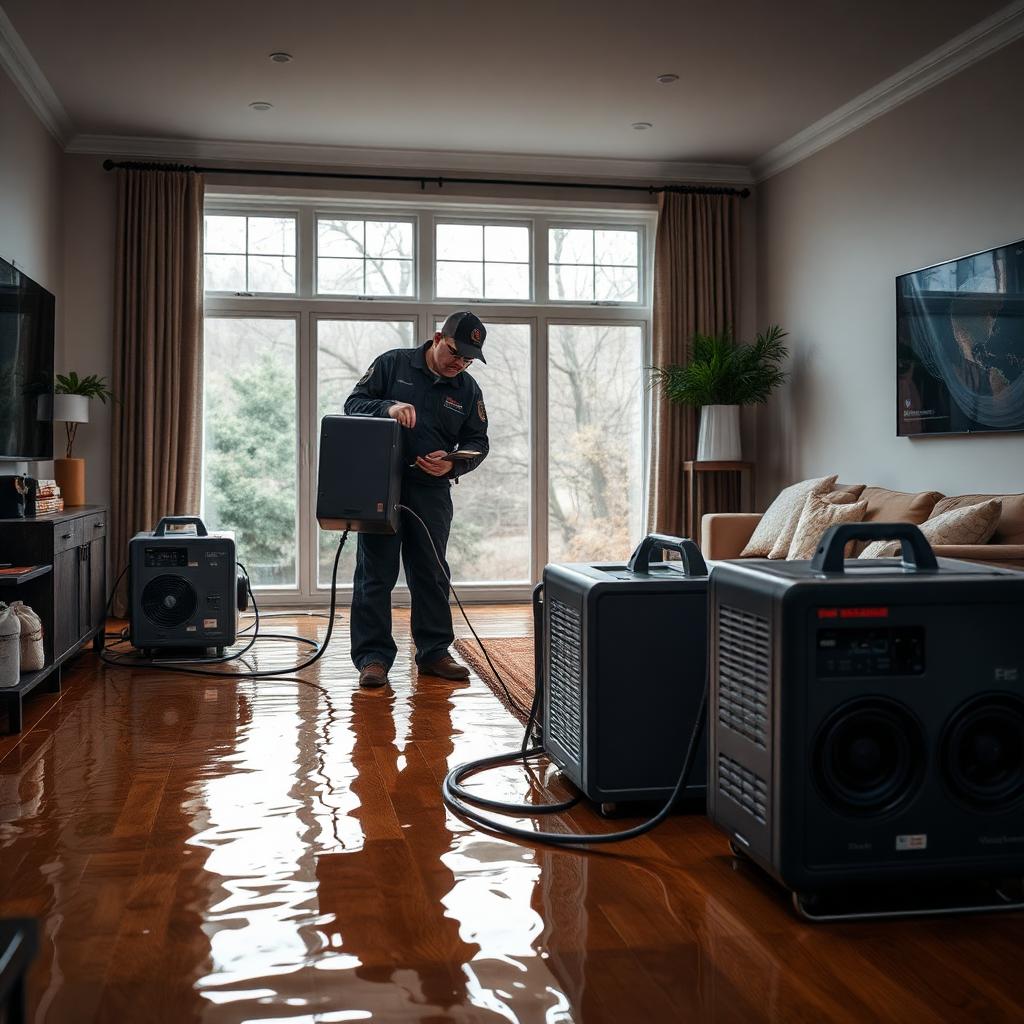
- Emergency response in under 60 minutes, 24 hours a day
- Truck-mounted extraction and industrial-grade structural drying
- Infrared moisture mapping to find water hiding inside walls and floors
- Direct billing with every major insurance carrier
- Antimicrobial treatment to prevent mold before it can start
- Full reconstruction and finish work under one roof — one contract, one crew
A complete scope of work.
Emergency Water Extraction
Truck-mounted pumps and industrial wet vacs remove standing water at rates measured in hundreds of gallons per minute, not per hour.
Structural Drying
Commercial dehumidifiers and axial air movers restore optimal humidity and moisture content in framing, subfloor, and drywall.
Moisture Mapping & Inspection
Infrared thermal imaging and pinless meters find water trapped inside walls, under flooring, and behind cabinets that visual inspection misses.
Content Pack-Out & Restoration
We inventory, pack out, clean, and store salvageable belongings off-site — then return them when reconstruction is complete.
Sewage & Category 3 Water
Certified handling of contaminated water losses with full PPE, containment, and antimicrobial protocols per IICRC S500.
Antimicrobial Treatment
EPA-registered antimicrobials on every wet surface prevent mold and bacterial colonization during the drying period.
HVAC Inspection & Cleaning
Water losses often push contamination into ductwork. We inspect and, when necessary, professionally clean HVAC systems.
Full Reconstruction
Drywall, insulation, flooring, cabinetry, trim, and paint — rebuilt by licensed trades to code, matching your existing finishes.
Insurance Documentation
Xactimate estimates, photo logs, moisture readings, and daily drying logs delivered directly to your adjuster.
Every minute of delay makes water damage worse
Water follows gravity and capillary action. Within the first 60 minutes of a pipe break, appliance leak, or storm intrusion, water has already migrated from the source into subflooring, up through drywall by wicking, and along ceiling joists. Within 24 hours, drywall begins to swell and delaminate, wood flooring cups, and — critically — mold begins to colonize wet cellulose.
That 24-hour window is why every hour of professional extraction saves days of drying, thousands of dollars of demolition, and — most importantly — prevents the mold contamination that can turn a covered water claim into an uncovered mold problem. When you call us, a truck is on the road with pumps running, air movers stacked in the cargo bay, and a certified project manager who has run this playbook many times.
We arrive with the calibrated equipment to measure exactly how wet your structure is, the industrial capacity to dry it back to below-baseline moisture content, and the documentation your insurance adjuster expects to see. That combination is why we regularly complete water losses in 3–5 days that would take a general contractor three weeks — with better outcomes and fewer surprises.
Understanding water damage categories and classes
The IICRC S500 standard classifies water losses in two ways. Categories describe the contamination level of the water itself: Category 1 is clean water from a supply line, Category 2 is 'grey water' from a dishwasher or washing machine, and Category 3 is 'black water' from sewage, flooding from ground surface water, or long-standing Category 2 that has begun to grow bacteria. Each category triggers different removal, disposal, and PPE protocols.
Classes describe how much of the structure is affected and how much water it holds. A Class 1 loss involves minimal absorption and a small area; Class 4 involves specialty drying of dense materials like hardwood, plaster, or masonry that have absorbed significant water. Correctly identifying category and class up front determines what equipment we bring, how long drying will take, and how much of your insurance claim will be approved.
That documentation matters because most claim denials are not about coverage — they are about scope. An adjuster who receives daily drying logs, moisture readings, category classification, and photographic evidence has everything they need to approve the claim. An adjuster who receives an invoice with no supporting data is going to push back. Our process is designed around what your carrier needs to see.
Common sources of residential water damage
The single most common source of homeowner water claims is supply-line failure — the flexible braided lines that connect washing machines, dishwashers, ice makers, and toilets to the wall. These lines fail without warning after 8–10 years, typically when no one is home, and can release 300–600 gallons per hour until someone finds them. We recommend replacing all flexible supply lines every 5 years and installing an automatic shut-off valve on the main.
The second is roof leak — worn shingles, failed flashing at chimneys and skylights, or ice damming that forces melt water under shingles. These leaks often go unnoticed until stains appear on the ceiling below, by which time attic insulation is saturated and roof sheathing may have begun to rot. Roof-driven water losses frequently involve hidden mold and always require a canine or moisture inspection to fully scope.
The third is HVAC condensate — clogged AC drain pans that overflow into ceilings or closets during cooling season. This category of loss is particularly insidious because it is slow and continuous, so mold has often colonized before anyone notices the problem. If you see brown staining on the ceiling below an air handler, treat it as urgent.
Step by step, start to finish.
Emergency Call
24/7 dispatch — a crew is en route within minutes with pumps, air movers, and dehumidifiers on the truck.
Inspection & Estimate
Full moisture mapping, category and class determination, and a written scope of work you can share with your insurer.
Extraction & Drying
Standing water removed, air movers and dehumidifiers set for optimal drying, and antimicrobials applied to prevent secondary damage.
Restoration & Rebuild
Once dry to below-baseline moisture levels, we rebuild damaged materials and finish with a walkthrough and workmanship guarantee.
Answers to common questions.
How fast can you respond to a water emergency?+
Our target response time for any emergency water loss is under 60 minutes, 24 hours a day, seven days a week. We have crews on rotating on-call schedules with fully stocked trucks so response is measured in minutes, not hours.
Will insurance cover water damage?+
Sudden and accidental water damage — burst pipes, appliance failures, storm-driven intrusion, sewer backups (with the appropriate endorsement) — is typically covered under standard homeowners policies. Long-term seepage, groundwater flooding without flood insurance, and maintenance-driven leaks are usually excluded. We help document the cause and bill your carrier directly.
How long does drying take?+
A typical Class 2 residential water loss dries in 3–5 days with proper equipment placement. Larger losses, dense materials, or high humidity conditions can extend that to 7–10 days. We monitor moisture daily and pull equipment only when materials read at or below documented baseline.
Do I need to move out during restoration?+
For most contained water losses, you can remain in unaffected areas of the home. Sewage losses, whole-home floods, and losses that require HVAC lockout usually require temporary relocation — which is normally covered by additional living expense on your policy.
What is the difference between mitigation and restoration?+
Mitigation is the immediate emergency work: extraction, drying, antimicrobial treatment, and stabilization to prevent further damage. Restoration is the reconstruction that follows — replacing drywall, flooring, paint, cabinetry, and finishes. We do both under one contract so there is no gap and no finger-pointing.
Can water damage cause mold?+
Yes, and quickly. Mold can begin to colonize wet cellulose materials in as little as 24–48 hours. Rapid professional drying is the single most effective way to prevent a water loss from becoming a mold problem. If drying is delayed, we recommend a canine mold inspection before reconstruction.
Explore more solutions.
Request your free inspection.
A certified specialist will call you back within 15 minutes to schedule your on-site assessment — no obligation, no pressure.
Damage doesn't wait. Neither do we.
One call sets a certified crew in motion. Free inspections, direct insurance billing, guaranteed workmanship.